
A few months back, Governor Greg Abbott wailed about the threats coming from “socialist cities like Austin, Houston, and Dallas.” Whether or not you share my excitement about the possibilities of a socialist Texas triangle, Abbott’s definition of socialism is about as absurd as it gets. But are most people’s definitions much better?
From the right to the left, there’s plenty of confusion about socialism to go around. As democratic socialists continue to win office, not just in New York City but in Texas, it’s high time for more clarity about what socialism is.
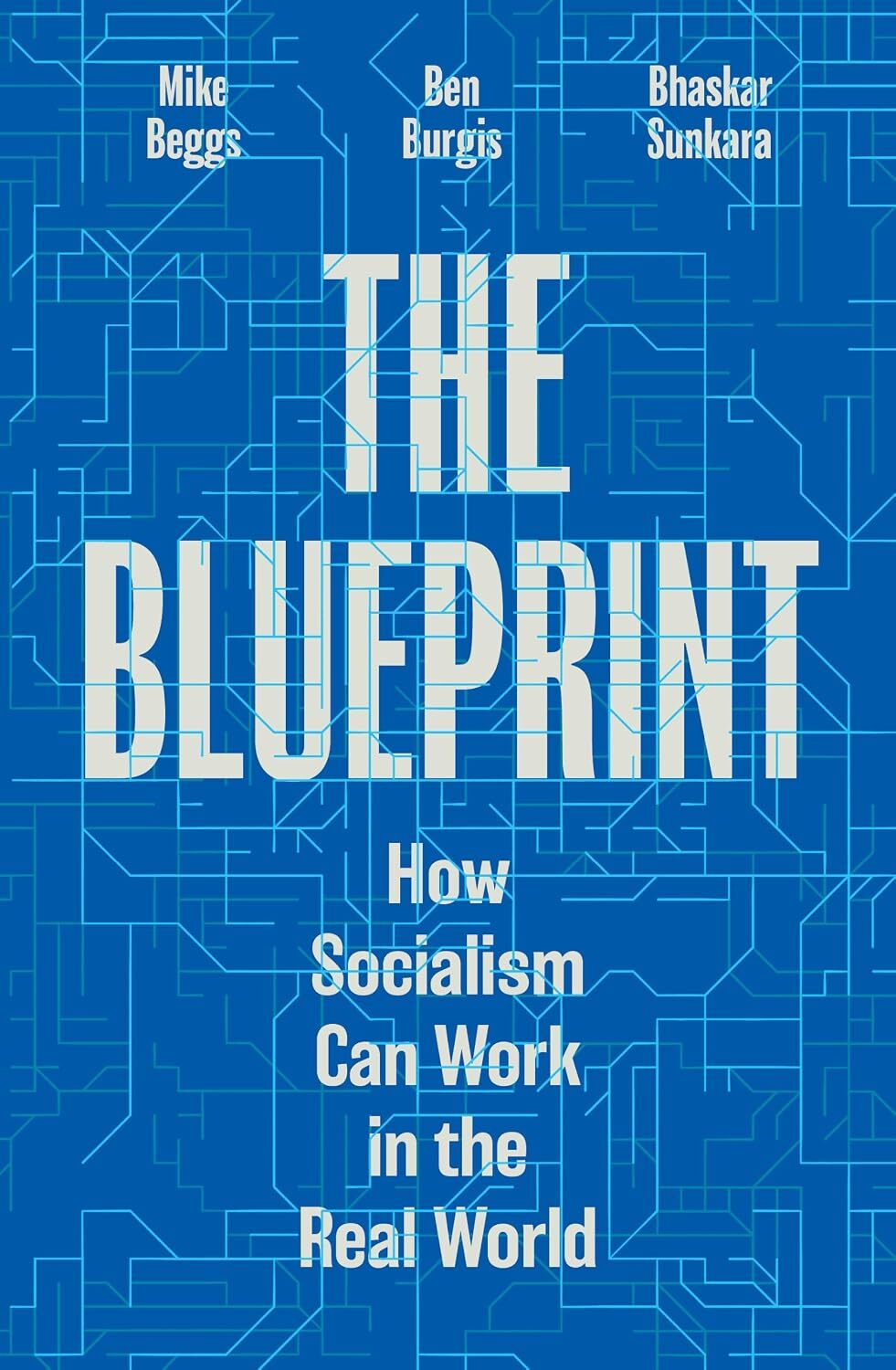
A new book, The Blueprint: How Socialism Can Work in the Real World, by Bhaskar Sunkara, Ben Burgis, and Mike Beggs—who are affiliated with the socialist magazine Jacobin, for which I host a podcast, is proof that the socialist movement in America is not just growing but growing up. The Blueprint lays out a vision for an achievable socialist future where firms are democratically controlled by workers, not by capitalists or the state. A strong social safety net ensures that losing your job is not a death sentence and high-quality education and healthcare abound. Home care work, often unappreciated and unpaid, is compensated. It’s a compelling vision.
This is no partisan screed. In fact, the authors are harsher on the Soviet Union than on Ludwig von Mises. If the quip often attributed to Oscar Wilde that “socialism takes up too many evenings” resonates with you, you’ll find much to like in The Blueprint. The book argues against a socialism of endless meetings. Instead, the authors suggest that “efficiency is a socialist virtue” and “is the key to liberating the most important resource of all: our time.”
It is a Tuesday morning, and you roll out of bed, still tired, but not like in the old days when you had only two days off. You head to your job making quality cowboy boots. Your democratically run firm has made a name for itself, reviving the old techniques and artisanship almost lost during the height of capitalist fast fashion. They’re a bit more expensive than your competitors’, but there is a good market for those who appreciate craftsmanship. Your workplace is a cooperative, where each worker has a vote and elects management, though that doesn’t mean you always get your way. You’ll still have a supervisor appointed by the company’s elected leadership, but unlike under capitalism, management doesn’t have all the power. Leadership still needs to be competitive and turn a profit, but it also needs to keep the company’s members happy. Decisions like how to implement new technology, and importantly, how to use productivity increases, are made with democratic input. New tech allowed your firm to make boots 30 percent faster. The firm can now choose how to balance the increased production and profits, with the potential to reduce hours across the firm. You’re happy with the decision, mostly more time off, with a slight increase in production to earn the firm more profit, and are excited to think about what you’ll buy when that extra profit comes back to you as a dividend. Under capitalism, benefits from improvements in labor-saving technology flow to the top, with reduced hours and job cuts so the boss can save on wages. But under democratic socialism, the benefits flow to the workers.
One of the book’s early chapters takes on the problem of the USSR. While the Soviet Union expanded rapidly and excelled at producing heavy industrial goods, its consumer market was plagued by shortages, inefficiencies, and low-quality goods. Political pressure gave managers bad incentives, and they often “concealed their true production capacity to obtain better plan targets, overreported output to move up the ranks of the nomenklatura.”
The vision in The Blueprint differs from what its critics might expect. They argue the Soviet Union wasn’t just undesirable politically; its economic failures were baked into the centrally planned system. Instead, the authors argue for market socialism, a system that combines markets and a large public sector—encouraging market activity where it produces good results like in producing commodities and limiting it where it provides undesirable results, such as housing and healthcare. While political terms like “free markets” have thoroughly associated markets with capitalism, markets existed long before capitalism. The authors argue that markets allow for a rational distribution of scarce goods, and a market can account for needs, opportunity costs, and preferences in a way that a centrally planned economy never could. Not only do markets provide much better information than even the most deliberative and intensive postcapitalist models, but they also free up people to do anything else.
Is this even socialism? It is a fair question, as market socialism is different from what most people think of when they think of socialism. But The Blueprint is very much a socialist vision. Their market socialism abolishes the capitalist class. Capitalists no longer own the factories and the workplaces; the workers do. The public sector manages healthcare and education. Firms can fail, and workers can be fired, but a safety net prevents a life-defining disaster.
At 432 pages, The Blueprint is a hearty doorstop of a book. The authors respond to left and right criticisms of their model in detail. They get into the tedium of how public bankers should be compensated, how to limit inflation with central bank policy, and how to have equity between long-term and newer members in a cooperative. It won’t convince the hardened ideologues, but these socialists are interested in the real world. This isn’t soapbox socialism.
The Blueprint sketches out socialist society, not a path to one. As far as it advocates an immediate strategy, it is a democratic path to socialism. “Market Socialism Now” probably won’t make a protest sign near you soon, but it probably is the answer to many of the demands you will hear at that protest. That’s the point: This is socialism moving from protest to politics, from polemic to a road map of what to do in power. It is up to people to decide if this is a future worth working toward.
It may feel overly ambitious to think about socialism as a real possibility in Texas, but we’ve been here before. Texas has deep connections with socialism and was once home to one of the largest socialist parties in the country. The Texas socialist newspaper, The Rebel, boasted a weekly distribution of over 22,000 a century ago (no small achievement then or now). These socialists set out to convince fellow Texans to weaken the power of capitalists and put more of the economy in the hands of worker-owned cooperatives. As one West Texas cotton farmer wrote in that socialist paper, “We must work together to help our brethren see the light. Give us Socialism and the religion of our Lord and Savior Jesus Christ.”
Can socialism come to be in Texas? It’ll be a hard road. But if it does, believers will need to make a strong case. The Blueprint provides that. In the decades following the height of the Socialist Party, socialists lost their roots in the working class. The movement became dominated by highly educated Americans and, in turn, absorbed all kinds of class characteristics that limited its appeal. An attachment to the Soviet Union and the plans that failed turned socialism dogmatic and its appeal diminished. The socialism laid out in The Blueprint would be much more familiar to that West Texas farmer a century ago. It’s concerned with the world as it is, the people and the work that make it run. And it offers a much better plan than what we’ve seen before. Maybe we will see the light.
The post Could Socialism Come to Texas? appeared first on The Texas Observer.


